
The Nazi Myth of Sacrifice
The Zone of InterestThis thread follows the regime’s performance of patriotic sacrifice as military defeat steadily reveals the hollowness of its promises.
increasing Bearing strength in each event
 decreasing
Bearing strength in each eventdecreasingThe Old Fighters’ Legend
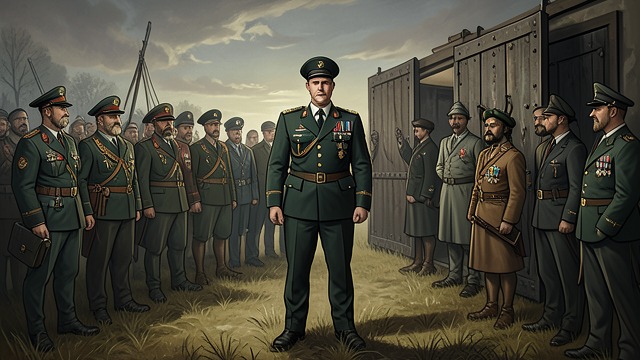
The Old Fighters’ Legend
Failure is retold as triumph
Doll turns the failed Beer Hall Putsch into a story of martyrdom and national rebirth. He describes its participants as heroes whose deaths guarantee a brighter future.
Political myth avoids consequences
The ritual does not ask whether the cause was just or what it produced. Instead, it converts defeat into proof that further obedience and sacrifice are required.
The Blood Flag
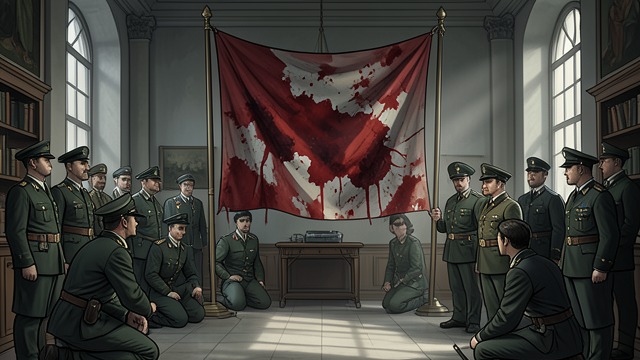
The Blood Flag
A relic is displayed
Doll presents the Blood Flag as a sacred symbol, linking it to the lives of the failed putschists. The ceremony borrows the language of religious devotion to sanctify political violence.
Sacred language masks brutality
The flag’s symbolism contrasts with the camp’s killing operations nearby. The ritual asks its audience to honor selected deaths while ignoring the victims produced by the regime.
The Sixth Army as a New Myth
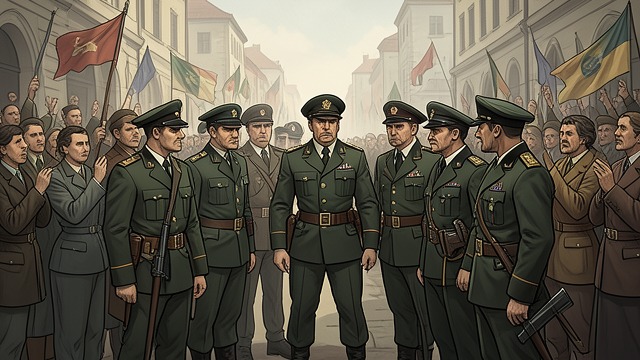
The Sixth Army as a New Myth
Defeat is prepared for as sacrifice
Doll and Prufer imagine that the Sixth Army will fight to the last bullet and become a monument to German prestige. They speak of death as a victory if it serves the right idea.
Death is made useful to authority
The imagined sacrifice conceals shortages, encirclement, and strategic failure. Its purpose is to preserve a story of national honor when the military situation cannot be defended.
Surrender Breaks the Story
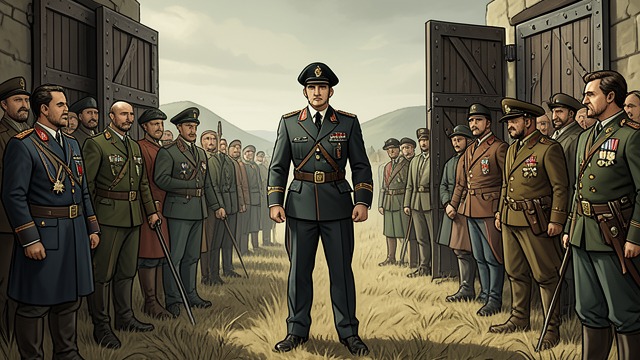
Surrender Breaks the Story
Captivity replaces heroic death
Mobius tells Doll that Paulus and the surviving soldiers surrendered rather than dying in a final charge. Doll cannot reconcile the news with the narrative he has repeated.
Myth changes without disappearing
Propaganda swiftly reframes the event as an example for the future. The regime’s language survives even when its claims about the battle are false.
Sacrifice After Defeat
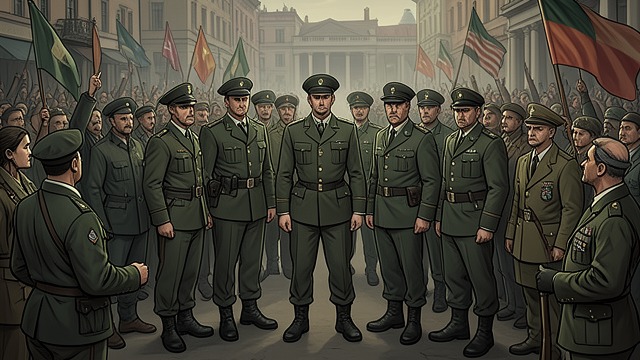
Sacrifice After Defeat
The regime continues its work
The military future has deteriorated, but selections and killing continue in the camp. The perpetrators still speak of loyalty and sacrifice while destroying prisoners.
The cost is borne by others
The myth gives the regime a way to demand sacrifices from soldiers, civilians, and captives without sharing the consequences equally. The novel exposes whose lives are treated as expendable.
November 9, 1942, during Doll’s memorial address
November 9, 1942, near the end of the memorial
January 1943, before the surrender is announced
February 1943, after the surrender at Stalingrad
Spring 1943, as the camp continues its killings
